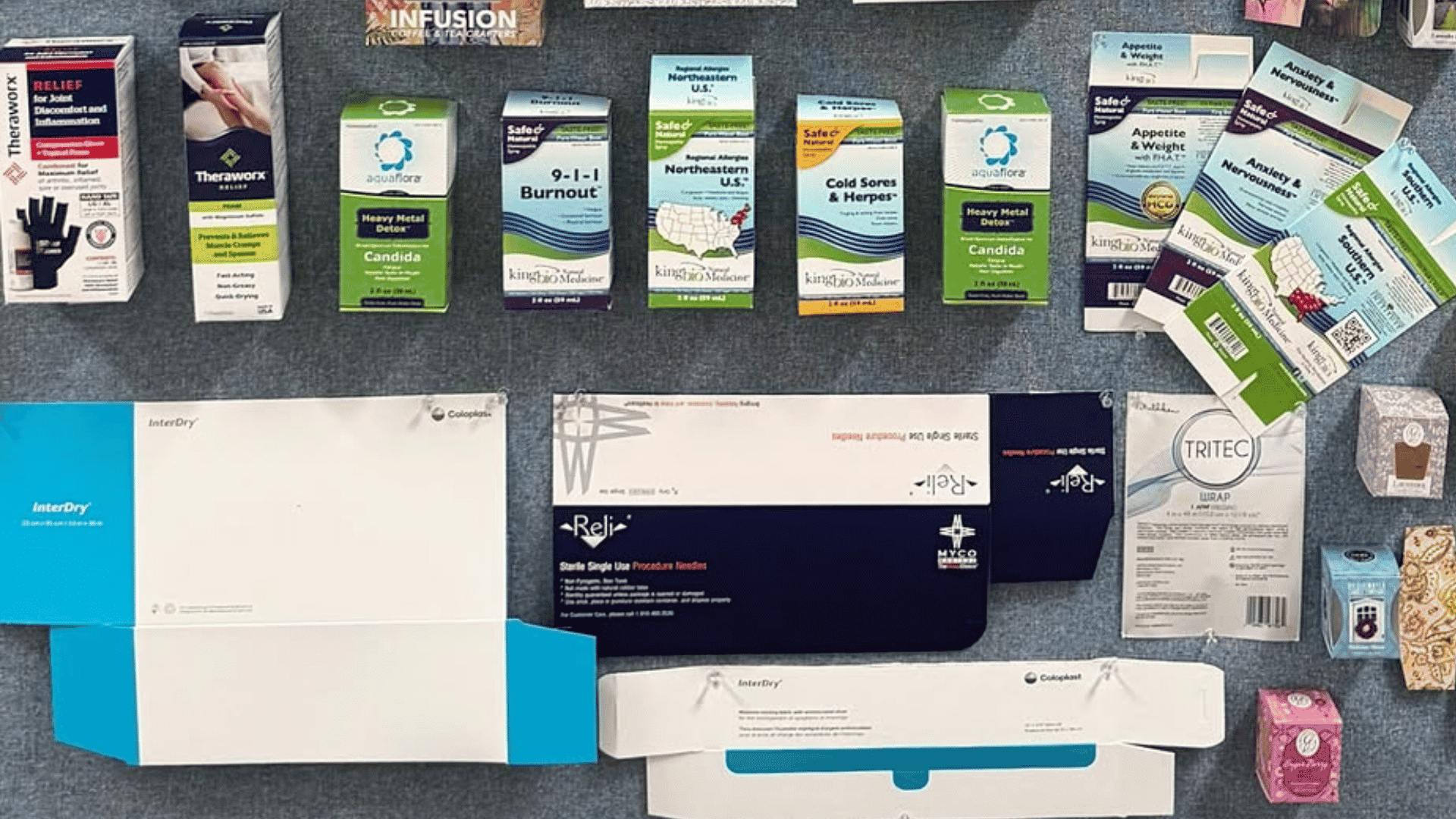
Few packaging categories carry higher stakes than pharmaceutical cartons. A single printing error or a mismatched code can mean a held shipment, a failed audit, or a recall, so precision is not a preference here, it is the baseline.
For pharmaceutical, nutraceutical, and medicinal brands, the secondary carton does far more than hold a product. It carries the regulatory information and the tamper evidence that keep a product compliant and trusted across the supply chain.
Folding Carton vs. Rigid Box: Which is the Right Packaging for Your Product?

The packaging decision facing every product manager seems deceptively simple: folding carton or rigid box? Yet this choice ripples through every aspect of your business, from production costs and shipping efficiency to consumer perception and brand positioning. Getting it right can differentiate your product on crowded shelves, while getting it wrong can sink an otherwise excellent product before it reaches consumers.
The confusion often starts with terminology. Many people use "carton," "box," and "package" interchangeably, but these packaging types serve different purposes and markets. Understanding the fundamental differences helps you make strategic decisions that align with your brand goals, budget constraints, and customer expectations.
Whether you're launching a startup's first product or optimizing packaging for an established brand, this choice affects everything from your bottom line to your environmental footprint. Let's cut through the marketing jargon and explore what really matters when choosing between folding cartons and rigid boxes.

The cardboard box sitting on your doorstep tells a story that extends far beyond the product inside. Today's consumers read that story carefully—examining materials, looking for recycling symbols, and making purchasing decisions based on a brand's environmental commitment. As sustainability concerns reshape consumer behavior across all demographics, businesses are discovering that eco-friendly packaging solutions provide competitive advantages while supporting meaningful environmental stewardship.
This shift represents more than a passing trend. Companies implementing comprehensive sustainable packaging strategies report measurable improvements in customer loyalty, enhanced brand perception, and often surprising cost savings through innovative design approaches and material optimization. The question isn't whether sustainable packaging makes business sense—it's how quickly your company can implement solutions that balance environmental responsibility with functional requirements and budget realities.
Whether you're launching a new product line or reimagining existing packaging systems, understanding the full spectrum of sustainable options enables informed decisions that transform packaging from an environmental liability into a competitive differentiator that resonates with conscious consumers and business partners alike.
Direct Mail ROI: How to Measure Success in Your Print Marketing Campaigns

In an increasingly digital world, direct mail continues to deliver impressive results. Direct mail consistently achieves response rates of 4.9% for prospect lists and an impressive 9% for house lists (Data & Marketing Association, 2023).
Understanding your direct mail ROI isn't just about tracking immediate responses—it's about building a comprehensive picture of how print marketing drives customer acquisition, retention, and lifetime value. Whether you're launching your first Every Door Direct Mail (EDDM) marketing campaign or optimizing existing strategies, the measurement techniques outlined here will transform your approach to print marketing success.
